
Bridging Climate Change and Healthcare
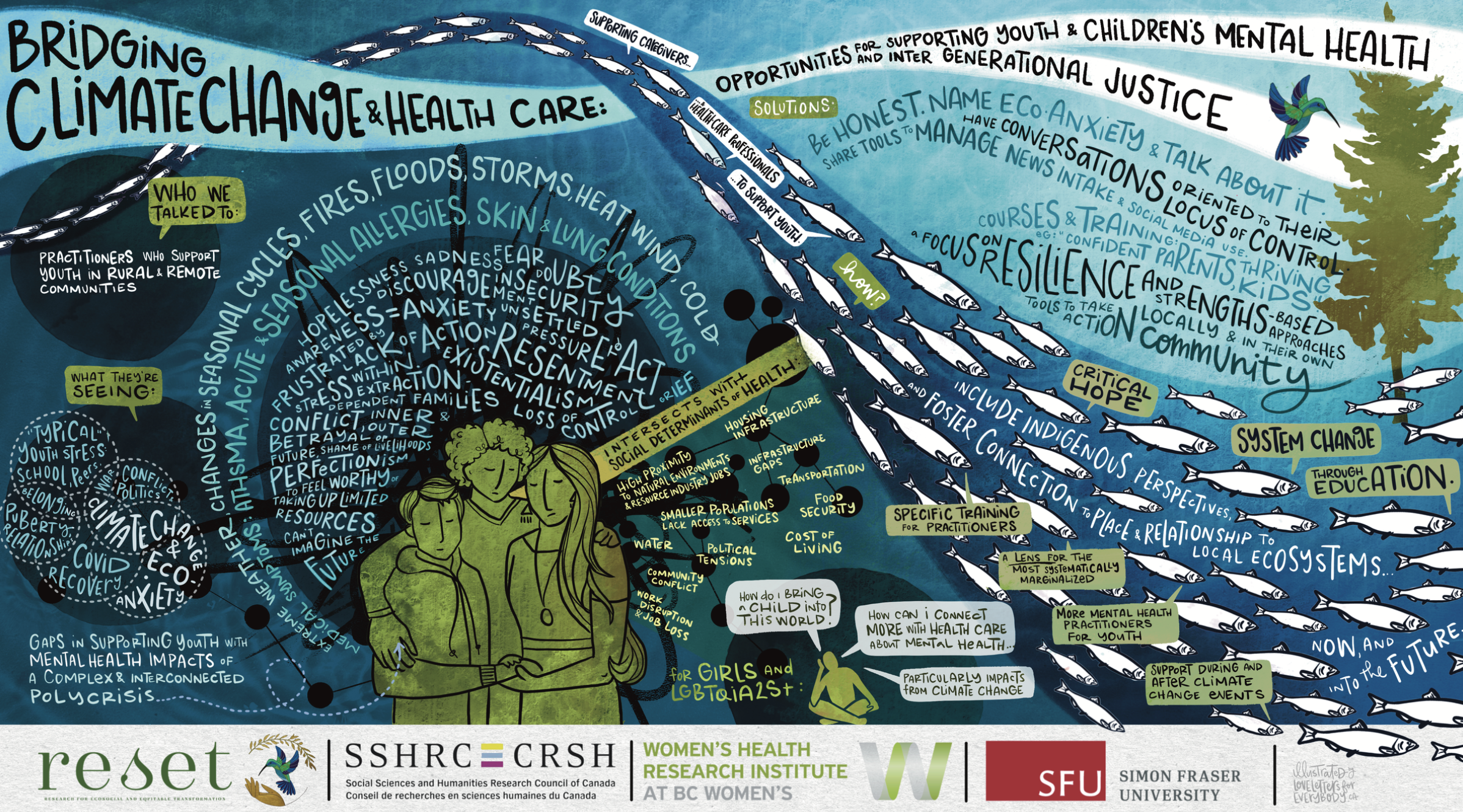
This project is focused on learning about how youth/children’s mental health is being affected by climate change, what healthcare related to climate change looks like in rural and remote communities, how children and youth are currently being supported, which places in the healthcare system could better support these youth/children, what the role of other family/peers/networks is in the healthcare journey for youth and children experiencing climate events, where climate change stays and disappears in the medical journey, how youth/children’s mental health could be incorporated into your community's existing programming, and how healthcare policies and settings could more effectively incorporate youth/children voices.
Background
Climate change stands today as one of the most pressing public health issues of the twenty-first century since it produces various health consequences for different population groups. Studies show that environmental changes from climate action have elevated the number of young individuals affected by anxiety, depression, and post-traumatic stress as well as the recently studied "eco-anxiety" or "climate grief" condition. Existing gender norms and structures produce social inequities that disproportionately discriminate against inequalities in society make young women and girls and gender-diverse individuals. This research investigates the perspectives of healthcare practitioners regarding climate change effects on the mental health of young women, girls, and gender-diverse youth in rural and remote communities of British Columbia. The research presents challenges and opportunities to advance climate-responsive, gender-sensitive healthcare practices in rural and remote areas.
Objectives
Our study attempts to address two objectives:
Objective 1: To understand how health care providers can support youth in rural and remote communities to navigate mental health challenges related to the climate crisis.
Objective 2: To make recommendations on how existing supports can promote an integrated, whole-of-community and whole-of-person focused approach to healthcare by linking climate change initiatives with broader mental healthcare support.
Findings
The findings reveal how environmental changes interact with the social determinants of health and gender-related vulnerabilities, resulting in distinct forms of distress among young people in the context of climate change. Advancing the implementation of formal climate-related mental healthcare training and practice resources will equip healthcare practitioners with the clinical tools needed to support young people at the intersection between mental health and climate change. This study also seeks to engage healthcare administrators and policy makers in further exploring strategies to strengthen child and youth resilience in the face of climate change and other complex global challenges

