
Healthy Children, Healthy Communities
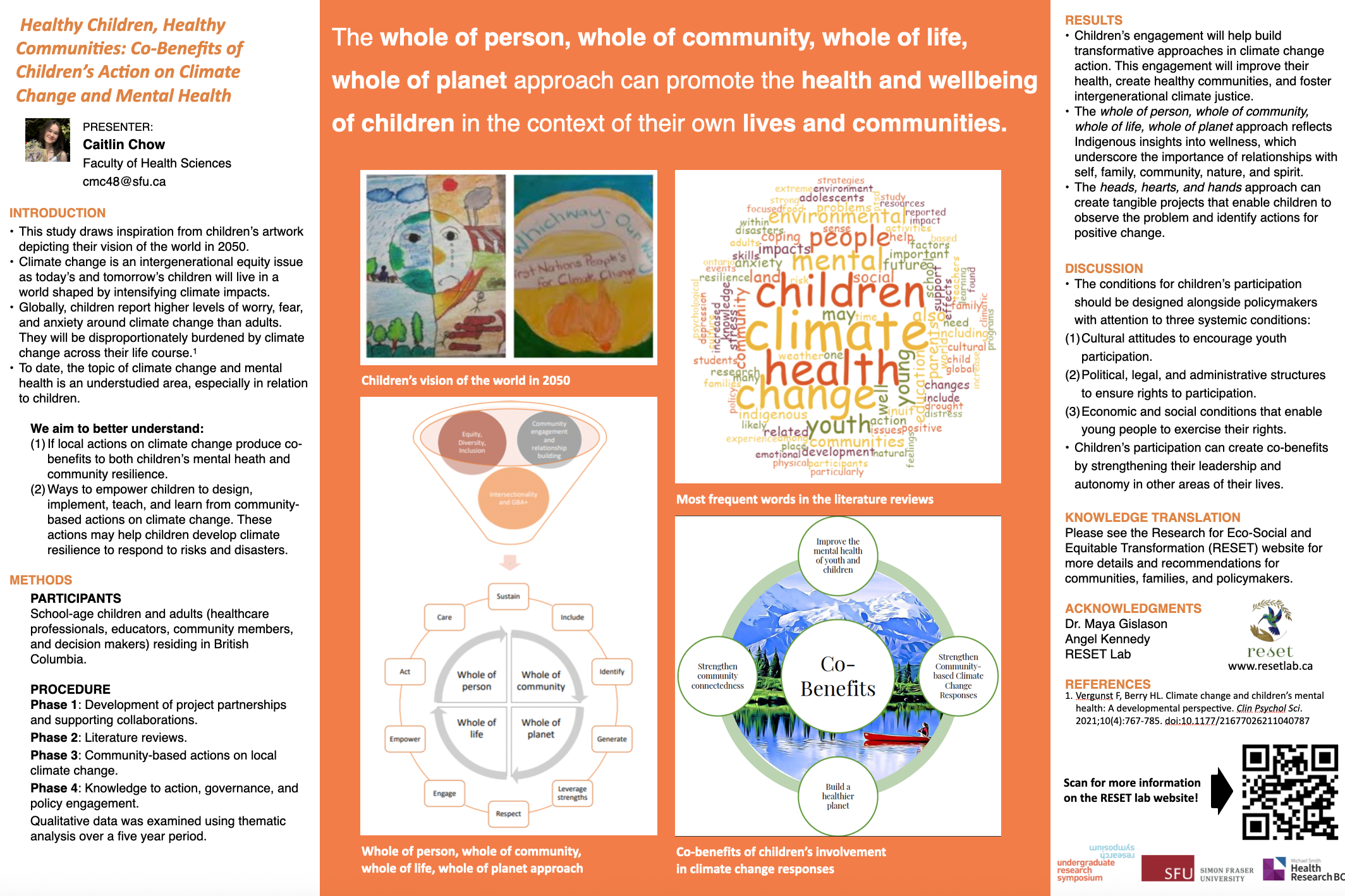
This study draws inspiration from children’s artwork depicting their vision of the world in 2050. Climate change is an intergenerational equity issue as today’s and tomorrow’s children will live in a world shaped by intensifying climate impacts. Globally, children report higher levels of worry, fear, and anxiety around climate change than adults. They will be disproportionately burdened by climate change across their life course. To date, the topic of climate change and mental health is an understudied area, especially in relation to children.
Outputs
Background
The Government of Canada maintains that climate change is both “the greatest health threat of the 21st century” as well as the “the greatest health opportunity of this century”. Climate change is an intergenerational equity issue as today’s and tomorrow’s children will not only live in a world that will be contoured by intensifying climate impacts but will also be exposed to a range of health risks across their life course which will exacerbate underlying vulnerabilities and amplify existing social and health inequities. Children have a unique capacity to perceive risks that are particular to their age and circumstances, and to propose child-friendly ways to overcome them. Because of this, children can offer ideas that may help to resolve challenges to local infrastructure, offer insights into children’s behaviors and resources to help strengthen community early warning systems, increase climate change awareness amongst their peer groups and with their families, and even model how to take doable, local actions on climate change that make a notable difference.
Objectives
We aim to better understand:
(1) If local actions on climate change produce co-benefits to both children’s mental heath and community resilience.
(2) Ways to empower children to design, implement, teach, and learn from community-based actions on climate change. These actions may help children develop climate resilience to respond to risks and disasters.
Findings
We found that children’s engagement will help build transformative approaches in climate change action. This engagement will improve their health, create healthy communities, and foster intergenerational climate justice. The whole of person, whole of community, whole of life, whole of planet approach reflects Indigenous insights into wellness, which underscore the importance of relationships with self, family, community, nature, and spirit. Additionally, the heads, hearts, and hands approach can create tangible projects that enable children to observe the problem and identify actions for positive change. As such, the conditions for children’s participation should be designed alongside policymakers with attention to three systemic conditions:
(1) Cultural attitudes to encourage youth participation.
(2) Political, legal, and administrative structures to ensure rights to participation.
(3) Economic and social conditions that enable young people to exercise their rights.
Children’s participation can create co-benefits by strengthening their leadership and autonomy in other areas of their lives.